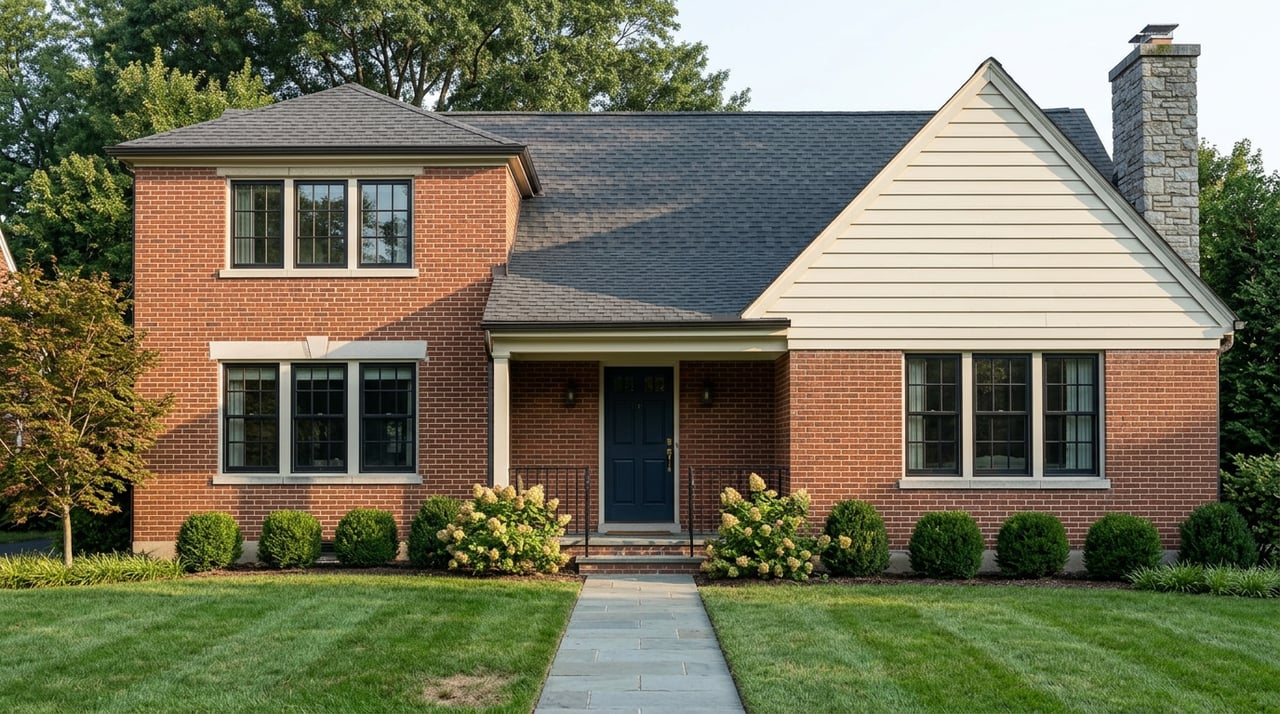
A home search filtered to "Falls Church, VA" will return listings from two places that share a name and not much else. One is a 2.2-square-mile independent city with its own police force, its own school district, and its own tax rate. The other is a much larger swath of Fairfax County that borrows the Falls Church name for its mailing address but answers to a completely different government. The listing photos won't tell you which one you're looking at. The tax bill will.
This isn't a footnote for people who care about municipal trivia. It's the single biggest variable in what a "Falls Church" home actually costs to own and which public school your child will attend, and it rarely shows up until a buyer is deep enough into the process that backing out feels expensive.
The Line a Zip Code Filter Can't Draw
The City of Falls Church is an independent Virginia city, which means it operates entirely outside Fairfax County's jurisdiction. It sets its own real estate tax rate, runs its own sewer system inside city limits, and staffs its own five-school district. Its footprint corresponds almost exactly to zip code 22046, with a small sliver bleeding into 22043.
Everything else carrying a "Falls Church" mailing address, zip codes 22041 through 22044, is Fairfax County. Those homes pay Fairfax County's tax rate, use Fairfax County's sewer infrastructure where available, and are zoned into Fairfax County Public Schools rather than the city's district.
Neither side is better across the board. But they are not comparable line items on the same spreadsheet, and treating them that way is where buyers get surprised.
The Rate Went Down. The Bill Went Up Anyway.
In May 2026, the Falls Church City Council voted 6 to 1 to cut the real estate tax rate from $1.185 to $1.18 per $100 of assessed value for fiscal 2027. That's the continuation of a longer trend: the city's rate stood at $1.335 per $100 back in fiscal 2020 and has been trimmed in most years since.
Here's the part that matters for anyone comparing a listing price to a future tax bill: even with the rate cut, the median city homeowner will still pay about $557 more in fiscal 2027, because assessed values rose faster than the rate fell. Citywide, the total assessed real estate base climbed 6.9% to $6.86 billion as of January 1, 2026, with residential values alone up 7.2%. Single-family homes rose 8.1%, townhomes 7.0%, condos 3.2%.
Fairfax County's base rate for tax year 2025 was $1.1225 per $100, and the county had proposed holding that same rate for 2026. On paper, that's about five and a half cents lower than the city's rate. In practice, the county notes that not every parcel pays the base rate. Special service districts and add-on fees can change the real number, so the base rate is a starting point, not the final bill, and any buyer comparing the two jurisdictions today should confirm the adopted 2026 rate directly rather than relying on the proposal figure.
Here's how the two jurisdictions stack up on paper:
| City of Falls Church | Fairfax County (Falls Church zips) | |
|---|---|---|
| Zip codes | 22046, part of 22043 | 22041, 22042, 22043, 22044 |
| FY real estate tax rate | $1.18 per $100 (FY2027) | $1.1225 per $100 (2025, proposed same for 2026) |
| School district | Falls Church City Public Schools | Fairfax County Public Schools |
| School enrollment | Guaranteed by residence within city limits | Assigned by boundary, pyramid-based |
| Sewer service | City-run sanitary sewer system | Fairfax County infrastructure |
| Trash collection | City-arranged service | County schedule or HOA contract |
The rate gap alone won't tell a buyer much. The reason the city commands a premium despite a higher headline rate sits inside the school assignment line.
Why the School District Is Doing the Heavy Lifting
Falls Church City Public Schools is a five-school system: Mount Daniel Elementary for the youngest grades, Thomas Jefferson Elementary, Mary Ellen Henderson Middle School, and Meridian High School, serving roughly 2,700 students total. Fairfax County Public Schools enrolls more than 183,000.
The scale difference shows up in numbers that matter to a parent evaluating a purchase. FCCPS reports a student-teacher ratio of 12.31, compared to 13.73 in Fairfax County. More strikingly, the most recent data shows zero teacher vacancies at FCCPS, at a time when other Virginia districts are managing vacancy rates above 10%. That kind of staffing stability tends to correlate with retention, consistency, and the sense that the same teachers will be there next year.
The enrollment mechanism is the part buyers most often miss. Inside the city limits, a residence guarantees a seat in the city's schools. There's no lottery, no boundary uncertainty. Step across the line into the Fairfax County side of a Falls Church mailing address, and assignment runs through FCPS boundary rules instead. Those addresses feed into what FCPS designates as Region 2, which groups the Falls Church, Justice, and McLean pyramids together, meaning two homes a few blocks apart can land in different school pyramids depending on the exact parcel.
That boundary picture also shifted recently. FCPS approved boundary changes back in January 2026 that are taking effect with the 2026-27 school year now underway, so a Fairfax County-side Falls Church address that fed into one pyramid last year could feed into a different one this year. Anyone evaluating a specific parcel should pull the current Boundary Locator result fresh rather than relying on a saved search or an older printout.
The Smaller Line Items City Buyers Should Budget For
Beyond taxes and schools, the fiscal 2027 city budget carries three utility increases worth knowing before closing:
- Sewer rates rise 5%, to $11.71 per 1,000 gallons, an average increase of about $27 per household
- Trash collection rates rise 4%, adding roughly $10 to $12 per residential customer
- Stormwater fees rise 7%, an average increase of about $23 per homeowner
None of these show up in a listing's estimated monthly payment. All of them are recurring costs unique to being inside city limits, since Fairfax County-side properties follow county trash schedules or HOA arrangements instead.
The city can absorb these costs partly because of something most buyers never think to ask about: commercial tax exposure. While Arlington, Alexandria, and Fairfax County have all wrestled with plummeting valuations on empty office buildings, Falls Church has largely sidestepped that problem. Mayor Letty Hardi described the city as "really fortunate" to be outperforming its neighbors on that front, a comment that matters because it explains why a city this small can keep funding services without leaning as hard on residential rate hikes as it otherwise might. Council member David Snyder put the underlying tension more bluntly during budget deliberations: "We're small but we're incredibly complex."
What This Means Before You Write an Offer
If a listing's mailing address says Falls Church, the zip code is the fastest way to sort which government you're actually dealing with. Anything in 22046 sits inside the independent city. Zip codes 22041 through 22044 are Fairfax County, even though the mailbox says the same thing.
From there, a few habits protect a buyer from an unpleasant surprise after closing:
- Confirm jurisdiction through the parcel record, not the mailing address, since a small portion of 22043 actually falls inside city limits
- Price out total carrying cost, not just the tax rate, since the city's higher headline rate comes bundled with city-run sewer, trash, and stormwater fees the county side doesn't charge the same way
- Verify school assignment against the current FCPS Boundary Locator directly, since the January 2026 boundary changes are now in effect for the 2026-27 school year and may have shifted a specific parcel's pyramid
- Ask whether the specific parcel falls under any additional county service district, since Fairfax County's base rate isn't universal across every property
None of this is a reason to prefer one side of the line over the other. A larger Fairfax County lot with more room to expand is a legitimate trade against a smaller, walkable city lot with guaranteed school enrollment. The point is that the trade should be made on purpose, with both bills and both boundary maps in hand, rather than assumed from a mailing address that was never designed to answer the question.
A Couple of Things Worth Confirming Directly
Does the city-county line ever move? Yes, incrementally. FCPS boundary changes approved in January 2026 took effect with the 2026-27 school year, which is why last year's pyramid assignment for a given address isn't guaranteed to still be accurate. City limits themselves change far less often, but the exact parcel-level boundary along 22043 is worth verifying for any specific address rather than assumed from the zip code alone.
Where do I check which side a specific address falls on? The City of Falls Church maintains parcel and GIS tools to confirm whether an address sits inside city limits, and Fairfax County offers its own GIS Parcel Viewer for county-side confirmation. Cross-checking both before writing an offer takes a few minutes and settles the question definitively.
Comparing homes across this boundary isn't something a portal filter or a median price chart can do for you. It takes someone who tracks both budget cycles and both school calendars year over year. If you're weighing a move into Falls Church, whichever side of the line you land on, Thomas Angel can walk through the specific parcel, the specific school pyramid, and the specific carrying cost before you're locked into an offer. Let's connect.