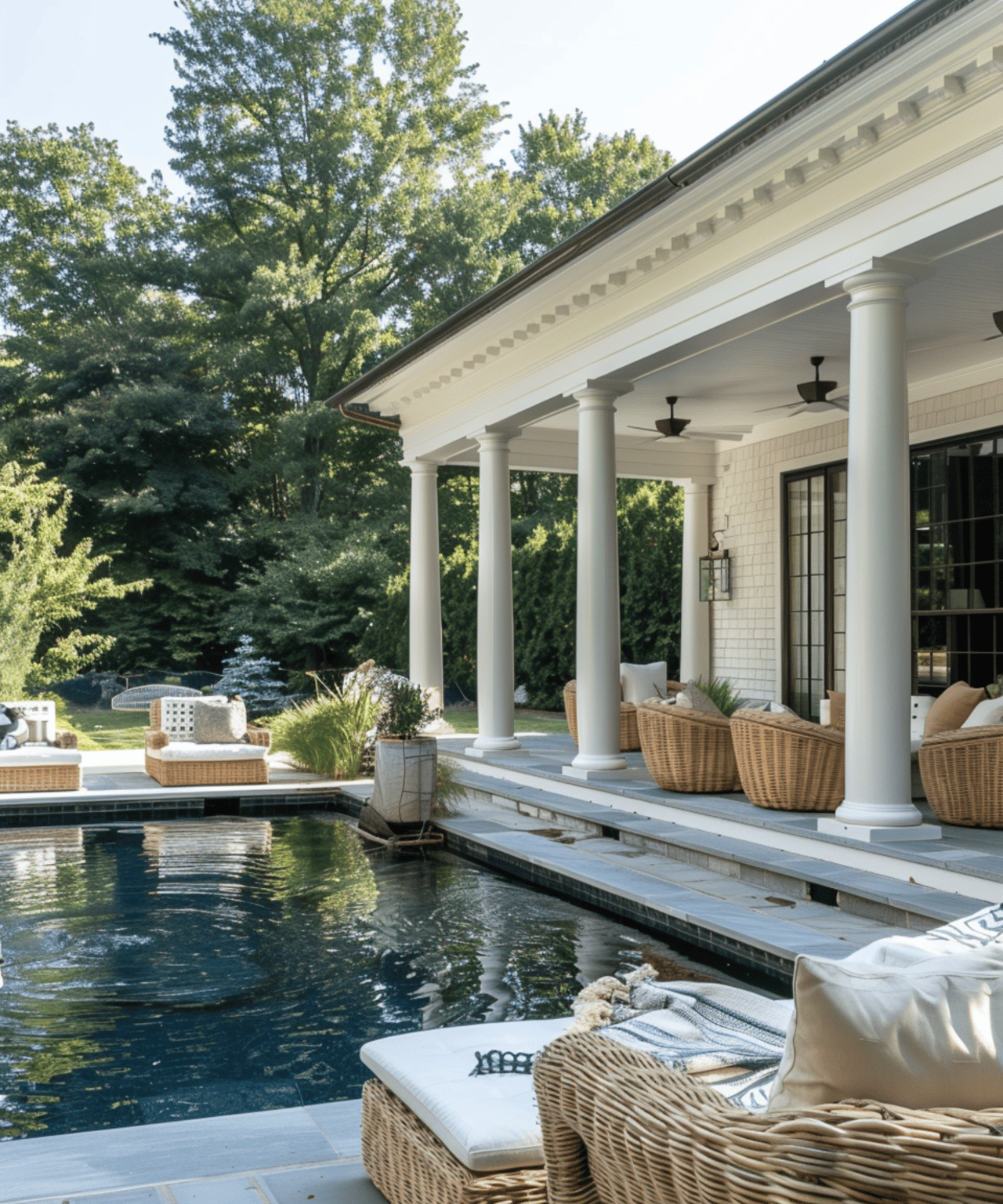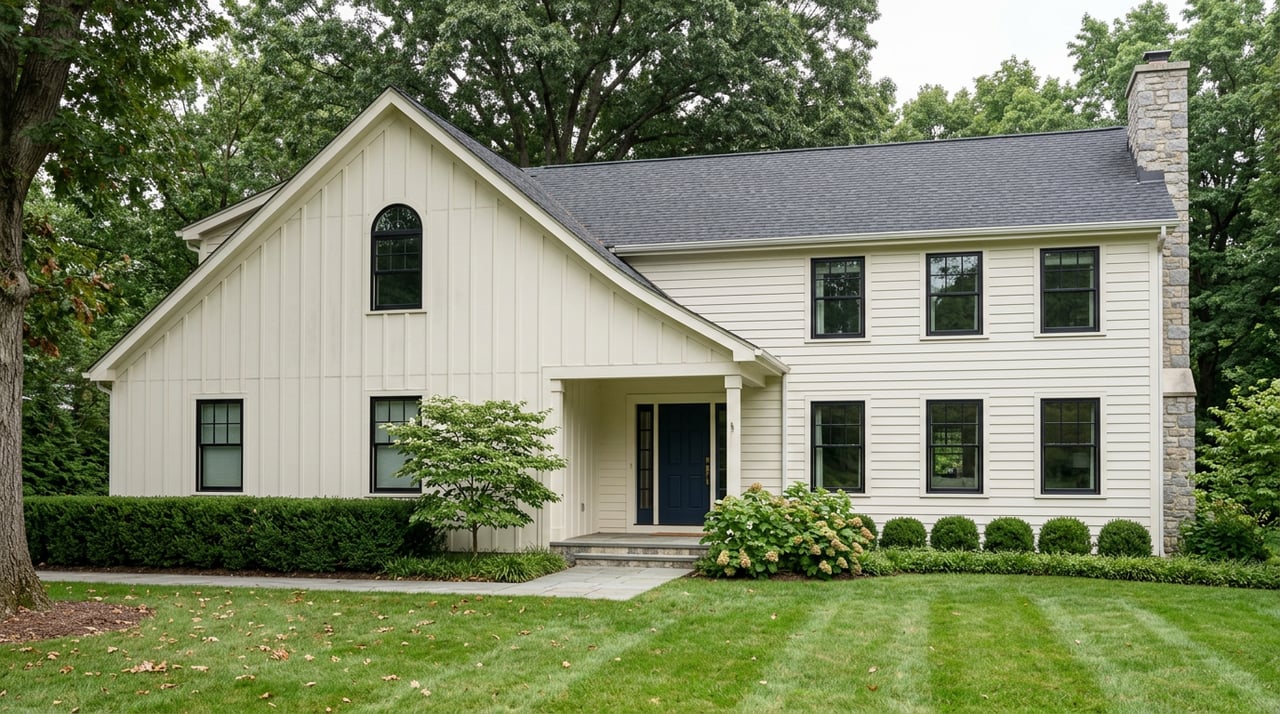
Picture a couple cross-shopping McLean, Vienna, and Great Falls with a plan that's worked for friends in both of the first two towns: buy something modest now, build equity, trade up in five years. In McLean and Vienna, that plan has a starting point. In Great Falls, it runs into a wall they didn't know was there, and it's not a market wall. It's a zoning line.
New data reported by FFXnow in June 2026 makes the wall visible. Using a Zillow analysis of "starter" homes, defined as the bottom third of a local market by value, Great Falls came back as the only locality in Virginia where that entry tier carries a median value above $1 million. The figure was $1,233,946. Nationally, the typical starter home was valued at $198,649. Great Falls belonged to a small and growing club: one of 242 U.S. communities where even the cheapest third of the housing stock clears seven figures, up from 226 a year earlier and just 80 in 2020.
Put another way, using Fairfax County's own July 2026 sales figures reported by FFXnow, the county's average sale price for a single-family home was $1,208,722. That's almost exactly what it costs to buy the least expensive third of homes in Great Falls. The starter tier here isn't cheaper than the county average. It's roughly equal to it.
The zoning line that sets the floor
The reason has less to do with buyer demand than with what's legally allowed to sit on the ground. Most of Great Falls falls under Fairfax County's R-E, or residential-estate, zoning district. That designation requires a minimum lot area of 75,000 square feet, close to 1.7 acres, for a conventional lot, along with 50-foot front setbacks, 20-foot side setbacks, and 25-foot rear setbacks. We've written before about how that ordinance shapes acreage living in Great Falls, but its effect on price is worth isolating on its own: there is no small-lot subdivision option here the way there is in parts of McLean or Vienna, where smaller parcels paired with public water and sewer access let builders produce a lower-cost entry product alongside the larger estates.
In a town where a builder can put four townhomes or a cluster of quarter-acre lots on land that would hold one Great Falls house, a genuine starter tier can exist. In Great Falls, the lot itself, before a foundation is poured, already costs more than what a starter buyer elsewhere in the county would spend on a finished home. The zoning line doesn't just influence the ceiling on Great Falls pricing. It removes the floor other towns rely on to create a lower tier at all.
Land here doesn't price like a commodity
Once you accept that lot size is doing the work, the next instinct is to price land by the acre and compare. That instinct breaks down fast in Great Falls, because raw acreage and improved acreage are different products wearing the same unit of measurement.
A raw or lightly improved 7.05-acre buildable parcel was recently marketed near $2.49 million, which works out to roughly $353,000 per acre. Compare that to a 17.3-acre estate that closed recently in the mid-teens of millions of dollars, and the per-acre math climbs into a different range entirely once the residence, grounds, and any water frontage or equestrian infrastructure enter the picture.
| Parcel type | Approximate acreage | Recent price | Rough price per acre |
|---|---|---|---|
| Raw or lightly improved land | 7.05 acres | ~$2.49 million | ~$353,000 |
| Improved estate with residence and grounds | 17.3 acres | Mid-teens of millions | Substantially higher |
The gap isn't a pricing error. It's the market correctly charging for the improvements, privacy, and lifestyle amenities layered onto the acreage, not the dirt itself. A buyer comparing two Great Falls listings by dividing price by acreage alone is making the same mistake as comparing two homes by price per square foot without checking condition. The number is real. The comparison it invites often isn't.
Why three portals tell three different stories
If you've searched Great Falls on more than one site recently, you may have noticed the numbers don't agree, and the disagreement isn't small. Zillow's home value index, updated through May 2026, put the average Great Falls home value at $1,708,805, down 1.2% over the prior twelve months. Over roughly the same window, Redfin reported the median sale price for the three months ending May 2026 at $1.9 million, up 23.1% from the same period a year earlier. By August 2026, Movoto's figures showed the median price per square foot down 6% year over year, with the median list price itself down another 2% from July.
| Source | Metric | Window | Reported change |
|---|---|---|---|
| Zillow | Average home value | 12 months ending May 2026 | Down 1.2% |
| Redfin | Median sale price | 3 months ending May 2026 | Up 23.1% |
| Movoto | Median price per square foot | August 2026 vs. August 2025 | Down 6% |
| Movoto | Median list price | August 2026 vs. July 2026 | Down 2% |
None of these figures is necessarily wrong. Each is measuring a slightly different window with a slightly different method, and in a market this thin, that's enough to point the arrows in opposite directions. Redfin counted 49 homes sold in Great Falls in May 2026, down from 51 the year before. Separate reporting on the local estate segment described January 2026 closings as a "handful," with active inventory across the 22066 ZIP code typically running in the dozens rather than the hundreds. When a single month's tally is a few dozen transactions, two or three high-value estate closings, or their absence, can swing an average or a median by double digits without reflecting any underlying shift in what buyers are willing to pay for a comparable home. Great Falls doesn't lack data. It lacks enough transactions in any given month to make a single median trustworthy on its own.
What this means if you're comparing towns
- The $1.2 million floor is structural, set by lot-size zoning, not by short-term demand. A rate cut or a cooling luxury segment will move activity at the top of the market well before it touches the entry tier, because the entry tier is defined by what's legally buildable, not by what buyers currently want to pay.
- Treat any single month's median or average from a listing site as a snapshot of which handful of homes closed, not as a market trend. Multi-quarter comparisons, drawn from the same source, are more useful than one number pulled from wherever you happened to search.
- If your budget sits meaningfully below $1.2 million and a smaller lot with public utilities matters more to you than acreage, that's a real signal to widen the search toward towns like McLean or Vienna rather than waiting for a lower tier to appear in Great Falls. It structurally can't, absent a zoning change.
- When comparing land, separate raw parcels from improved estates before doing any price-per-acre math. The two aren't the same unit of value even when the spreadsheet treats them that way.
A couple of things worth asking before you commit to a search radius
Does the $1.2 million figure mean Great Falls prices are still climbing? Not necessarily. It describes the bottom third of the local market as measured in June 2026 data. Whether prices are rising or falling depends on which source and which window you're looking at, and as the numbers above show, those can point in different directions at the same time.
Are there any homes in Great Falls priced meaningfully below that tier? A small number of properties on legacy or non-conforming smaller lots do trade below the broader range, but they're exceptions within a zoning pattern that otherwise sets a high floor across the ZIP code, not evidence of a genuine lower tier forming.
If you're weighing Great Falls against McLean, Vienna, or Falls Church and trying to figure out what a specific budget actually buys once zoning, lot economics, and thin-market pricing are accounted for, that's exactly the kind of comparison Thomas Angel works through with clients regularly. Let's Connect and put your numbers against the right comps before you write an offer.